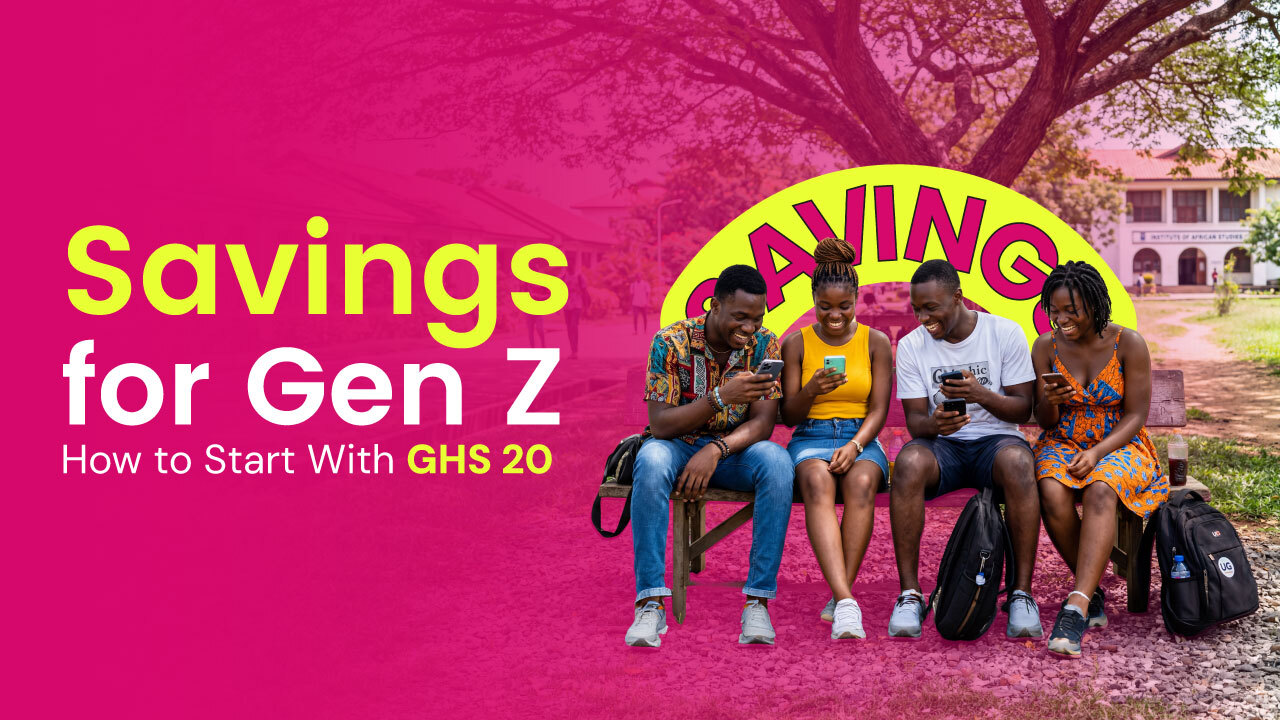
Savings for Gen Z in Ghana is not about waiting until you earn a big salary or land the perfect job. It is about learning to keep more of what you already have, no matter how small. If you are between 18 and 25, living in Accra, Kumasi, or anywhere in Ghana, the pressure to spend is real. Data bundles, transport, food, and the occasional night out with friends can drain your wallet before the month is halfway done. You have probably heard older relatives say "save small small" but nobody showed you exactly how to do it in a way that fits your life right now.
Here is the truth: you do not need thousands of cedis to start. You do not need a traditional bank account with high minimum balances. In 2026, all you need is your phone and GHS 20 to begin building a savings habit that will change your financial future. This guide walks you through what saving actually means for your generation, why it matters more now than ever, and exactly how to get started step by step.
For previous generations in Ghana, saving money meant hiding cash in a drawer, joining a susu group, or opening a fixed deposit account at the bank. For Gen Z, the game is different. You are the most digitally connected generation Ghana has ever seen. You pay for things with mobile money, you shop online, and you manage your entire life from your phone. Your approach to saving should match that lifestyle.
Saving does not mean you stop enjoying your life. It means you set aside a portion of your income, allowance, or side-hustle earnings before you spend the rest. Think of it as paying your future self first. Even GHS 20 a week adds up to over GHS 1,000 in a year, and that is before interest.
The key difference in 2026 is access. Digital savings tools now let you open an account in minutes, deposit as little as GHS 20, and earn interest rates that traditional banks simply do not offer on small balances. The Bank of Ghana has licensed several fintech platforms to provide these services, which means your money is regulated and protected, just like it would be in a bank.
If you want to understand the basics of managing money at a young age, our guide on financial planning for young adults breaks down the fundamentals.
You might think saving can wait until you finish school or get a better-paying job. That thinking is the single biggest financial mistake young Ghanaians make. Here is why starting now matters more than starting with a lot.
The cost of living in Ghana is rising. According to the Ghana Statistical Service, inflation has consistently pushed up the prices of essentials like food, rent, and transportation over the past several years. Every month you delay saving, your money buys less. Starting now, even with small amounts, means you are building a buffer against rising costs instead of falling further behind.
There is also the power of compound interest. When your savings earn interest, and that interest earns more interest, your money grows faster the longer you leave it. A Gen Z Ghanaian who starts saving GHS 50 per month at age 20 will be in a fundamentally different financial position at 30 than someone who starts at 27 with GHS 200 per month. Time is the one advantage you have that no amount of money can buy back.
Beyond the numbers, saving builds discipline. It trains you to make intentional choices about your money instead of reacting to every impulse. That discipline carries over into every financial decision you will ever make, from negotiating your first real salary to deciding when you can afford to start a business.
And let us be honest: unexpected expenses happen. Your phone breaks. A family member needs help. Transport costs jump. Without savings, you are one emergency away from borrowing at high interest or going without something you need. A savings cushion, even a small one, gives you options.
Knowing you should save is one thing. Actually doing it is another. Here is a practical, step-by-step approach designed for how Gen Z in Ghana actually lives and earns.
Saving works better when you have a target. Vague goals like "I want to save more money" rarely stick. Instead, get specific. Are you saving for a new phone? An emergency fund of GHS 500? A short course to build a skill? Write it down, put a number on it, and set a deadline.
For example: "I will save GHS 600 by December 2026 for a laptop deposit." That gives you about GHS 75 per month or roughly GHS 19 per week. Suddenly, a big goal feels manageable.
Forget queuing at the bank. In 2026, you can open a savings account from your phone in under five minutes. Look for a platform that offers a high interest rate, a low minimum deposit, and easy withdrawals. EasySave lets you start with just GHS 20 and earns 10% annual interest on your balance, which is significantly higher than what most traditional banks offer on basic savings accounts.
The important thing is to separate your savings from your spending money. If your savings sit in the same mobile money wallet you use for daily expenses, you will spend them. A dedicated savings account creates a boundary that makes it harder to dip in impulsively.
The secret to consistent saving is removing willpower from the equation. If you have to manually decide to save every week, life will get in the way. Set up automatic transfers so a fixed amount moves to your savings account on payday or allowance day.
Start with what you can afford without stress. GHS 20 per week is a realistic starting point for most Gen Z Ghanaians. As your income grows, increase the amount. The habit matters more than the amount at this stage.
Check your savings balance at least once a month. Watching your money grow is genuinely motivating. It reinforces the habit and helps you spot patterns. If you missed a week, you can adjust. If you are ahead of schedule, you can celebrate that small win.
Most digital savings platforms show your balance, interest earned, and deposit history in the app. Use that information. Knowing your numbers is the foundation of financial literacy, and it is a skill that will serve you for the rest of your life.
This is where most young savers struggle. You see the money sitting there and think, "I will just take GHS 50 for this weekend and replace it next week." But next week, something else comes up. Before you know it, your savings are back to zero.
Create a personal rule: savings are only for their stated purpose. If you set a goal of GHS 600 for a laptop, that money is for the laptop. Period. For daily emergencies, keep a small buffer in your regular mobile money wallet. Your savings account is not your everyday spending account.
If you are a student looking for more practical tips, our guide on the best ways for students to save money in 2026 covers strategies specific to campus life.
Understanding what not to do is just as important as knowing the right steps. These are the most common financial mistakes young Ghanaians make, and they are all avoidable. Spending everything you earn is the most obvious one. When money comes in, whether from a part-time job, a side hustle, or family support, it disappears immediately on wants rather than needs. The fix is simple: save first, spend what is left. Even if "first" means GHS 20 before you touch anything else.
Ignoring small amounts is another trap. GHS 10 here, GHS 15 there seems insignificant. But those small leaks add up to hundreds of cedis per month. Track your spending for one week and you will be surprised at where your money actually goes.
Borrowing for non-essentials catches many young people. Taking a loan to buy the latest phone or fund a lifestyle you cannot afford creates a cycle of debt that is hard to break. Before borrowing for anything, ask yourself: will this purchase earn me money or appreciate in value? If the answer is no, save for it instead.
Not having an emergency fund leaves you vulnerable. Without even GHS 200-300 set aside for the unexpected, every minor crisis becomes a financial disaster. Build this cushion before you save for anything else.
Comparing your financial life to social media is perhaps the most damaging habit. What you see on Instagram and TikTok is curated. The person showing off a new outfit or a fancy meal may be broke by the end of the week. Live within your means, not within someone else's highlight reel.
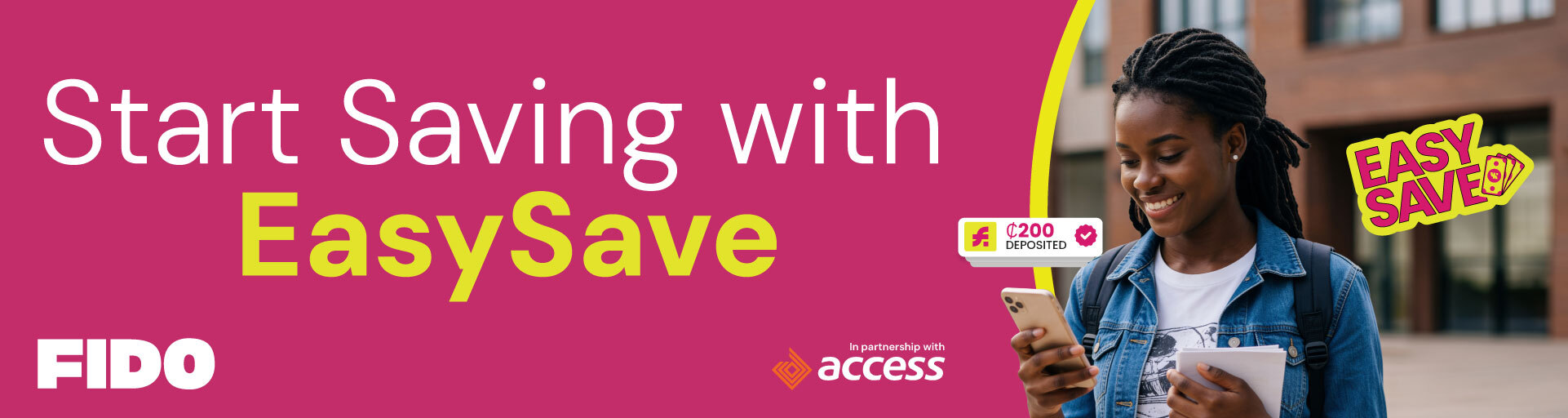
If you are looking for a practical tool to put all of this into action, EasySave by Fido is built for exactly this. It is a digital savings wallet designed for Ghanaians who want to save without the barriers that traditional banks put up.
You can open an account and start saving with just GHS 20. There is no paperwork, no branch visits, and no minimum balance requirements beyond that initial deposit. Your savings earn 10% annual interest, which means your money is actively working for you while you go about your day. On a balance of GHS 1,000, that is GHS 100 in interest over a year, earned without lifting a finger.
EasySave runs on the Fido app, which is licensed and regulated under the Bank of Ghana. Your deposits are protected, and you can withdraw your money whenever you need it with zero fees. For Gen Z Ghanaians who want to build a savings habit on their own terms, it removes every common excuse: not enough money, too complicated, no interest earned, cannot access funds when needed.
The app also shows your savings progress clearly, so you can track how close you are to your goal. No wahala, no hidden charges, just a straightforward way to grow your money. Start saving with EasySave today.
Saving money as a Gen Z Ghanaian is not about depriving yourself or waiting for a bigger paycheck. It is about making small, intentional moves with whatever you have right now. GHS 20 today becomes GHS 1,000 this year. GHS 1,000 this year becomes financial breathing room next year. The earlier you start, the more time works in your favour.
You have the tools, the access, and now the knowledge. The only thing left is to take the first step. Open an EasySave account, deposit your first GHS 20, and let your savings journey begin. Small small, you go reach there. Download the Fido app and start saving with EasySave.